Apexel 100mm Macro Lens Review: Less Shadow, More Distance, Better Macro
If you’ve ever tried a cheap 10–20× clip-on macro lens, you already know the frustration.
You line everything up…
then you have to push the lens almost into the subject.
Your phone casts a big ugly shadow.
The insect you were about to photograph flies away.
And when you finally get a shot, the edges are soft and the background looks messy.
 Check price
At some point you start wondering:
Is mobile macro just supposed to be this annoying?
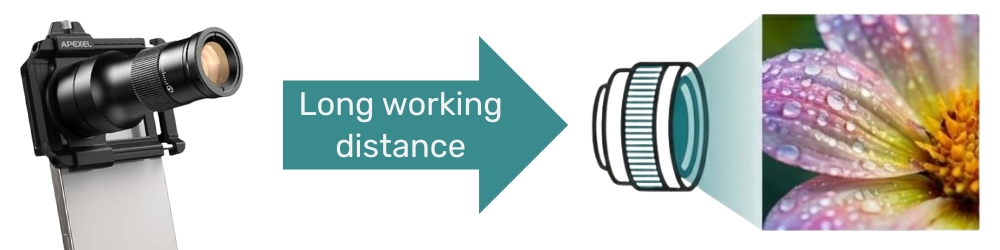
The Apexel 100mm doesn’t focus on bigger numbers, because magnification was never the main issue. The real limitation in phone macro is working distance.
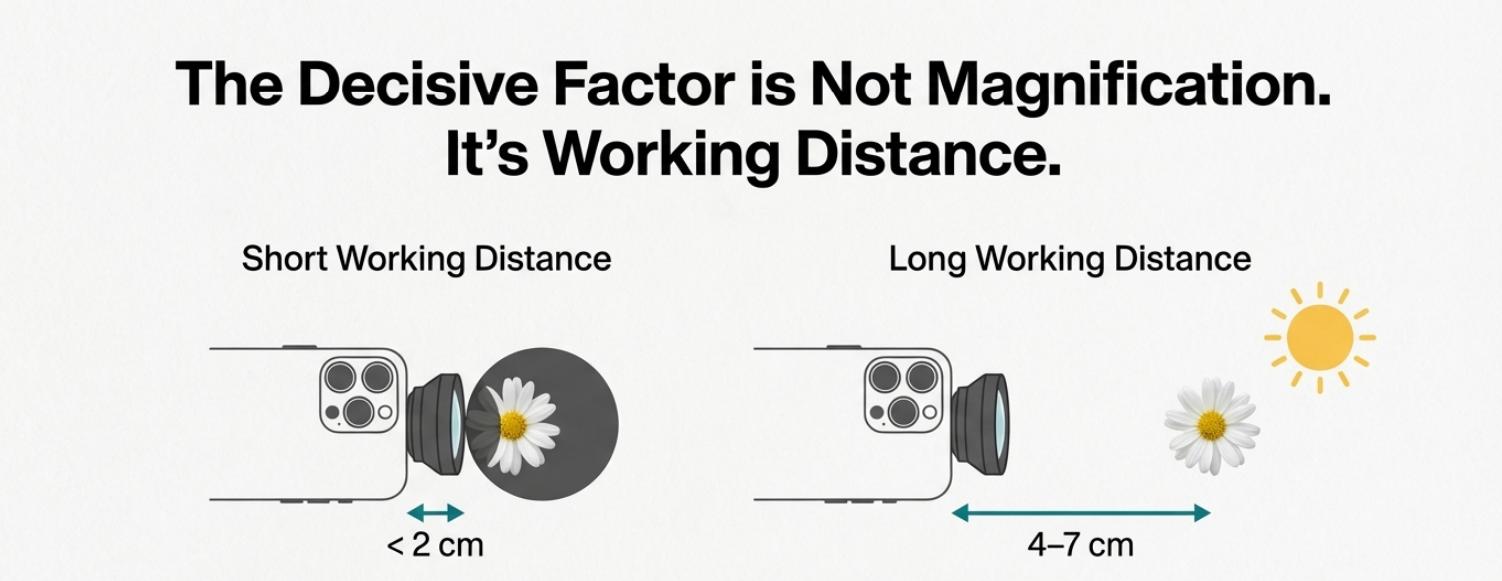
This review explains why working distance changes everything — and why the Apexel 100mm is one of the few phone macro lenses that actually feels like an upgrade instead of another compromise.
The Real Enemy of Phone Macro: Being Too Close
Most budget phone macro lenses chase big numbers: 15×, 20×, even 25×.
What they don’t tell you is the cost of that magnification.
In practice, you get:
- a working distance of just a few millimetres
- blocked light and harsh shadows
- nervous insects and damaged flowers
- shaky focus and inconsistent results
It’s not a skill issue.
It’s physics.
What “Working Distance” Really Means (In Plain English)
Working distance is simply the space between the front of the lens and your subject when it’s in focus.
With many cheap clip-on macro lenses, that distance is almost nothing.
You’re basically touching the subject.
The Apexel 100mm macro lens changes the geometry:
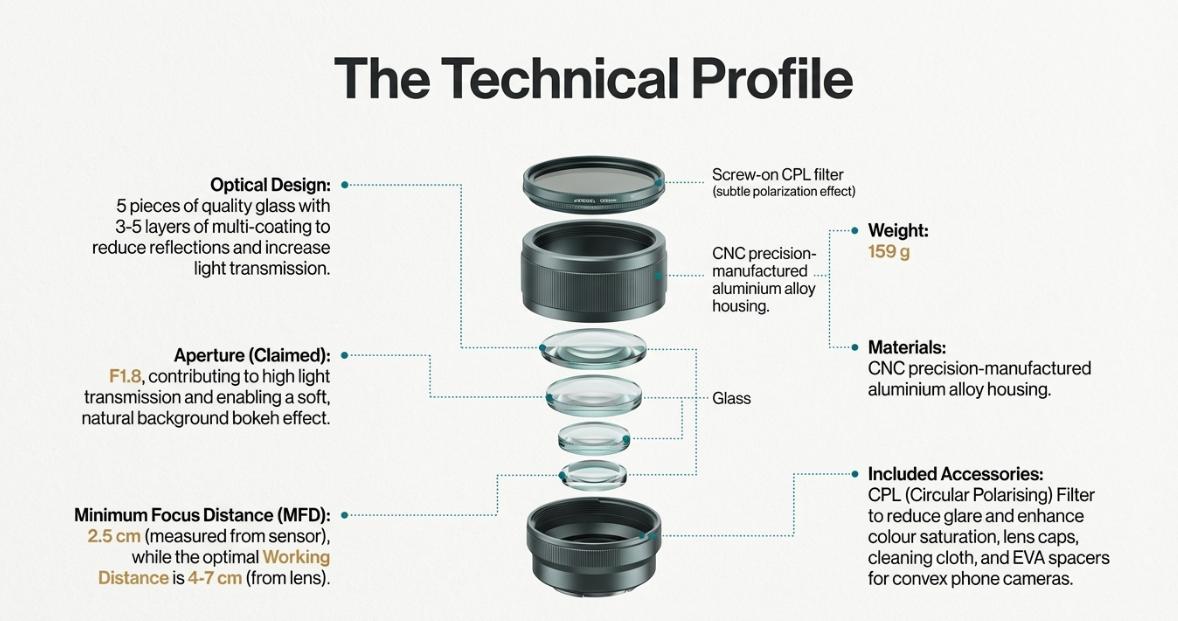
- Typical working distance: around 4–7 cm
- Enough space to:
- let light in
- avoid scaring insects
- position a small LED or reflector
- actually breathe while shooting
This one design choice solves most of the problems beginners blame on themselves.
This is the core promise of the Apexel 100mm:
Macro photography that’s calmer, brighter, and far more forgiving.
Why 100mm Feels Different on a Phone
 Check price
The 100mm focal length gives the Apexel a tele-macro look that built-in phone macro modes simply can’t replicate.
Instead of everything looking flat and busy, you get:
- a narrower field of view
- stronger background separation
- smoother, more natural bokeh
- a look closer to DSLR macro than phone macro
This matters because most people don’t want “documentation macro”.
They want dramatic close-ups — insects popping from the background, petals floating in blur, textures isolated and clean.
That’s exactly what longer focal length delivers.
Optical Magnification Beats Digital Tricks
Another quiet advantage of the Apexel 100mm is how it achieves magnification.
Instead of zooming digitally or switching to a weaker macro camera, it uses your phone’s main camera with proper glass optics.
If you’ve ever wondered why phone macro shots fall apart when you zoom in later, this is the reason.
The CPL Filter: Small Detail, Big Difference
Most phone macro kits stop at “here’s the lens”.
The Apexel 100mm often includes a CPL (circular polariser) — and that’s a bigger deal than it sounds.
In macro photography, reflections are everywhere:
- shiny insect shells
- wet leaves
- glass, jewellery, plastics
- glossy product surfaces
A CPL lets you dial those reflections down by simply rotating the filter.
The result:
- deeper colours
- more visible texture
- cleaner, more professional-looking images
This isn’t a gimmick.
It’s a control tool that macro photographers normally associate with DSLR setups — now available on a phone.
Accessories That Actually Solve Problems
Instead of padding the box with random extras, the Apexel kit focuses on usability:
- Secure phone clamp → easier alignment, less frustration
- ¼″ tripod thread → stability when magnification amplifies shake
- Room for lighting → longer working distance means light can actually fit
These aren’t “nice to haves”.
They address the exact reasons people give up on phone macro after a week.
“But My Phone Already Has a Macro Mode…”
That’s the fair question — and the answer isn’t “throw your phone macro away”.
Built-in macro modes are:
- quick
- convenient
- good enough for casual snaps
But they’re also limited by:
- tiny sensors
- ultra-wide lenses
- very short working distances
- heavy software processing
The Apexel 100mm doesn’t replace phone macro.
It sits above it — for people who want:
- better light control
- real background blur
- consistent focus
- and images that hold up when viewed properly
That’s the difference between “it’s neat” and “this actually looks good”.
Who the Apexel 100mm Is Really For
This lens makes the most sense if you:
- feel limited by cheap clip-on macro lenses
- want better insect and nature shots without chasing subjects
- sell small products and need clean close-ups
- enjoy experimenting with light, texture, and detail
- want DSLR-style macro without carrying a camera bag
It’s not about being “pro”.
It’s about removing the friction that makes macro feel harder than it needs to be.
Final Thoughts: Why Working Distance Wins
The Apexel 100mm macro lens doesn’t succeed because it promises extreme magnification.
It succeeds because it understands how people actually shoot.
If you’re serious about mobile macro — and tired of fighting your gear — this is one of the few lenses that genuinely feels like a smart step forward rather than another experiment.
And that, more than any marketing number, is what makes it worth considering.
FAQ: Apexel 100mm Macro Lens
1. What makes the Apexel 100mm macro lens different from cheap 10–20x clip-on lenses?
Most cheap clip-ons offer high magnification only at extremely close distances, which causes shadows, focusing problems and scared subjects. The Apexel 100mm is a tele-macro lens with a longer working distance (around 4–7 cm), better optical quality, smoother background blur and more control thanks to the included CPL filter and tripod-ready mount.
2. Why is working distance so important in mobile macro photography?
Working distance is the space between the front of your lens and the subject when it’s in focus. If that distance is tiny, your phone blocks the light and you have to get uncomfortably close to insects or delicate subjects. A longer working distance makes it easier to:
- keep your subject lit,
- avoid casting shadows,
- shoot live subjects without scaring them,
- and position lights or reflectors in front of the lens.
3. Can the Apexel 100mm macro lens really beat my phone’s built-in macro mode?
Built-in macro modes are convenient, but they’re usually limited by small sensors and very short focal lengths. The Apexel 100mm uses the phone’s main camera with a longer focal length and optical magnification, giving you:
- cleaner files,
- better background blur (bokeh),
- and more flexible working distance.
You don’t have to choose one or the other – but if you want a more “DSLR-like” macro look, an external lens wins.
4. Does the Apexel 100mm work with both iPhone and Android?
Yes. The Apexel 100mm macro lens is designed to work with most modern smartphones, including iPhone and Android devices. The universal clamp/bracket aligns the lens over your main camera. If your phone has multiple lenses, you simply attach it over the primary camera (usually the 1x lens).
5. Can I use the Apexel 100mm with a phone case on?
In many cases, yes – especially with slim or medium-thickness cases. The included clamp or bracket typically has enough reach to grip over the case and hold the lens in front of the camera. For very thick or heavily textured cases, you might get better alignment by removing the case while shooting.
6. Do I need a tripod to use this macro lens?
You can absolutely hand-hold the lens, especially in bright light, but macro magnification amplifies every tiny movement. For the sharpest results – especially indoors or in low light – using a mini tripod with the built-in ¼" mount is highly recommended. It also makes it easier to fine-tune focus and composition.
7. What does the CPL filter actually do in macro photography?
The CPL (circular polarizer) filter:
- cuts reflections and glare on shiny surfaces,
- deepens colours,
- and reveals more texture and detail.
It’s particularly useful for shooting insects, wet leaves, glass, jewellery, watches and other reflective subjects. Rotating the CPL while you look at the screen lets you dial in exactly how much reflection you want to keep or remove.
8. Is the Apexel 100mm macro lens suitable for beginners?
Yes. It’s an excellent choice for beginners who:
- are frustrated with cheap clip-on lenses,
- want better results than their phone’s basic macro mode,
- and are ready to experiment with light, focus and composition.
The longer working distance makes it more forgiving, and the included accessories (mount, CPL, tripod thread) help new macro photographers get consistent, repeatable shots.
If you’re looking for a way to upgrade your phone’s macro capabilities without carrying a full camera bag, the Apexel 100mm macro lens is one of the few options that tackles the real-world problems hobbyists face: working distance, lighting, subject comfort and image quality.